
Full Coverage Insurance Quotes: Do They Really Cover Everything? sets the stage for this enthralling narrative, offering readers a glimpse into a story that is rich in detail with casual formal language style and brimming with originality from the outset.
Exploring the various facets of full coverage insurance, including what it encompasses, the components it typically covers, and why obtaining such insurance is crucial, will shed light on this complex yet essential topic.
Introduction to Full Coverage Insurance Quotes
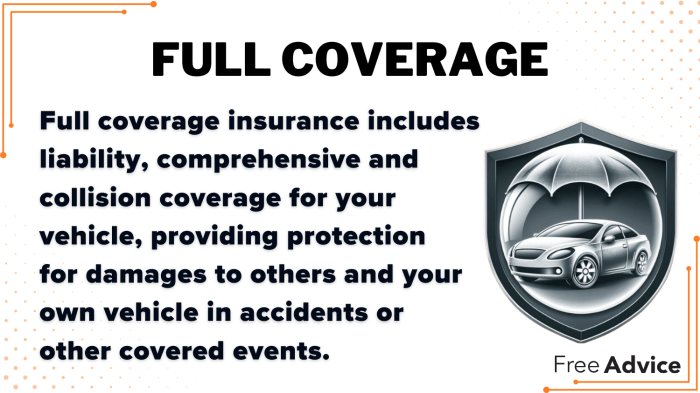
Full coverage insurance is a comprehensive insurance policy that provides a wide range of coverage for your vehicle. While the term "full coverage" can vary depending on the insurance company, it typically includes a combination of coverage types to protect you financially in various situations.
Components Covered by Full Coverage Insurance
- Liability Coverage: Protects you if you're at fault in an accident and covers the other party's medical bills and property damage.
- Collision Coverage: Pays for repairs or replacement of your vehicle if it's damaged in a collision with another vehicle or object.
- Comprehensive Coverage: Covers damage to your vehicle from non-collision incidents, such as theft, vandalism, fire, or natural disasters.
- Uninsured/Underinsured Motorist Coverage: Protects you if you're in an accident with a driver who doesn't have insurance or enough insurance to cover your expenses.
- Personal Injury Protection (PIP) or Medical Payments Coverage: Covers medical expenses for you and your passengers regardless of fault.
Importance of Getting Full Coverage Insurance
Having full coverage insurance can provide you with peace of mind knowing that you are financially protected in a variety of situations. It can help cover the costs of repairs, medical bills, and other expenses that may arise from accidents or unforeseen events.
While it may have a higher premium compared to basic insurance, the added protection can be invaluable in the long run.
What Full Coverage Insurance Quotes Include
When you purchase full coverage insurance, you are typically getting a combination of different types of coverage to protect you in various situations. Here are some of the types of coverage usually included in full coverage insurance:
Collision Coverage
Collision coverage helps pay for repairs to your vehicle if you are involved in an accident, regardless of who is at fault. This coverage can be beneficial in situations where you collide with another vehicle or object, such as a tree or a fence.
Comprehensive Coverage
Comprehensive coverage helps pay for damages to your vehicle from incidents other than collisions, such as theft, vandalism, or natural disasters. This coverage is beneficial if your car is stolen, damaged by a hailstorm, or vandalized.
Liability Coverage
Liability coverage helps pay for injuries and property damage that you are legally responsible for in an accident. This coverage is essential in situations where you cause an accident that results in injuries to others or damages to their property.
Uninsured/Underinsured Motorist Coverage
This type of coverage helps protect you if you are involved in an accident with a driver who does not have insurance or does not have enough insurance to cover your expenses. Uninsured/underinsured motorist coverage can be beneficial in situations where the at-fault driver is unable to cover your medical bills or repair costs.
Medical Payments Coverage
Medical payments coverage helps pay for medical expenses for you and your passengers if you are injured in an accident, regardless of who is at fault. This coverage can be beneficial in situations where you need immediate medical attention after a car crash.
Rental Reimbursement Coverage
Rental reimbursement coverage helps cover the cost of a rental car while your vehicle is being repaired after an accident. This coverage is beneficial in situations where you rely on your car for daily transportation and cannot afford to be without a vehicle.Overall, while full coverage insurance provides a comprehensive level of protection, it may still have exclusions or limitations depending on the policy and insurance provider.
It is essential to review your policy carefully and understand what is covered and what is not to ensure you have the right coverage for your needs.
Do Full Coverage Insurance Quotes Cover Everything?
When it comes to full coverage insurance, it's essential to understand the extent of protection it provides. While the term "full coverage" may suggest comprehensive coverage, there are still limitations to what it includes.
Extent of Coverage in Full Coverage Insurance
Full coverage insurance typically includes coverage for both liability and physical damage to your vehicle. This means it covers expenses related to accidents, theft, vandalism, and other unforeseen events. However, it's important to note that full coverage insurance may not cover every possible scenario.
Comparison to Other Insurance Policies
- Compared to liability-only insurance, full coverage insurance provides broader protection by including coverage for damage to your own vehicle.
- On the other hand, full coverage insurance may not offer the same level of specialized coverage as other policies, such as gap insurance or roadside assistance.
- While full coverage insurance is more comprehensive than basic policies, it may still have exclusions or limitations that could leave you vulnerable in certain situations.
Scenarios Requiring Additional Coverage
- One scenario where additional coverage may be necessary is in the case of an accident where your vehicle is deemed a total loss. Full coverage insurance may only provide reimbursement based on the actual cash value of your vehicle, which could be lower than what you owe on a loan or lease.
- Another scenario is if you frequently drive in areas prone to natural disasters or have expensive customizations on your vehicle. In these cases, supplemental coverage for specific risks may be needed.
- Additionally, full coverage insurance may not cover items stolen from your vehicle or personal belongings damaged in an accident, highlighting the need for additional coverage options.
Understanding Policy Limits and Deductibles
When it comes to full coverage insurance, understanding policy limits and deductibles is crucial in determining the extent of coverage provided in case of a claim. Policy limits refer to the maximum amount your insurance company will pay for a covered loss, while deductibles are the amount you must pay out of pocket before your insurance kicks in.
How Policy Limits and Deductibles Affect Coverage
- Policy Limits: Having higher policy limits means more coverage, but it also comes with higher premiums. Lower policy limits may result in gaps in coverage, leaving you vulnerable to additional expenses.
- Deductibles: Choosing a higher deductible can lower your premiums, but you will have to pay more out of pocket in the event of a claim. On the other hand, a lower deductible means higher premiums but less out-of-pocket expenses.
Examples of Impact on Claims
- If you have a policy limit of $100,000 for property damage and the repair costs amount to $150,000, you will be responsible for the $50,000 difference.
- For a deductible of $500 and a claim of $3,000 for damages, you would pay the $500 deductible, and your insurance would cover the remaining $2,500.
Choosing Appropriate Limits and Deductibles
- Consider your financial situation and how much you can afford to pay out of pocket in the event of a claim.
- Assess the value of your assets and the potential risks you face to determine appropriate policy limits.
- Work with your insurance agent to find a balance between coverage and cost that meets your individual needs.
Epilogue
In conclusion, delving into the realm of full coverage insurance reveals a nuanced landscape where protection is paramount but not absolute. Navigating the intricacies of policy limits, deductibles, and the fine print can lead to informed decisions that safeguard against unforeseen risks.
Full Coverage Insurance Quotes: Do They Really Cover Everything? invites us to ponder the breadth of coverage and the gaps that may exist, prompting a deeper understanding of insurance in its entirety.
Question & Answer Hub
Do full coverage insurance quotes cover rental cars when traveling?
Yes, most full coverage insurance policies include coverage for rental cars when traveling, but it's essential to check the specific details of your policy to ensure this coverage applies in your situation.
Is full coverage insurance more expensive than other types of insurance?
Full coverage insurance tends to be more expensive due to its comprehensive nature, covering a wide range of scenarios compared to more limited policies.
Can full coverage insurance protect against natural disasters?
While full coverage insurance provides robust protection, it may not always include coverage for natural disasters. Additional riders or policies may be necessary to safeguard against such events.