
Delving into the realm of auto insurance policies, this piece uncovers the key elements that make for a stellar policy quote. Brace yourself for a journey filled with valuable insights and expert advice.
Exploring coverage options, pricing factors, and the nitty-gritty details, this article aims to equip you with the knowledge needed to secure the best auto policy quote.
Factors to Consider
When looking for a great auto policy quote, there are several key factors to consider that can have a significant impact on the cost and coverage of your insurance policy.
Importance of Coverage Options
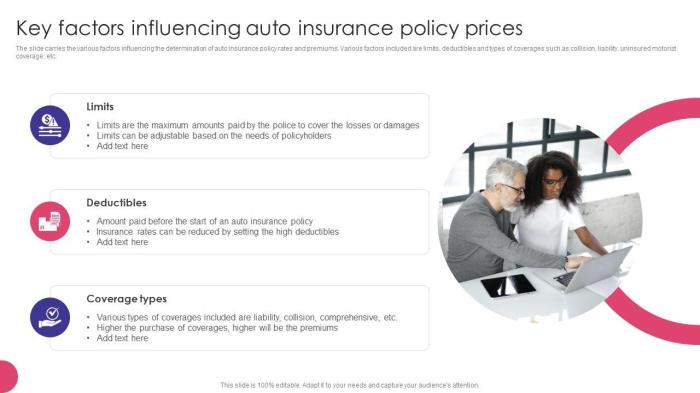
- Having a clear understanding of the coverage options available is crucial in determining the adequacy of your policy. Different types of coverage, such as liability, collision, and comprehensive, offer varying levels of protection for your vehicle and finances.
- Consider your individual needs and the value of your vehicle when selecting coverage options. While more coverage may provide greater protection, it can also increase your premium costs.
- Reviewing and comparing coverage options from different insurers can help you find the right balance between protection and affordability.
How Deductibles Affect Policy Quotes
- The deductible is the amount you agree to pay out of pocket before your insurance coverage kicks in. Typically, higher deductibles result in lower premium costs, while lower deductibles lead to higher premiums.
- Choosing the right deductible amount involves weighing the immediate cost savings against the potential financial burden in the event of a claim. Consider your budget and risk tolerance when deciding on a deductible.
- Comparing policy quotes with different deductible amounts can help you determine the most cost-effective option for your specific situation.
Impact of Vehicle Type on Auto Insurance Rates
- The type of vehicle you drive can significantly influence your auto insurance rates. Factors such as the make, model, age, safety features, and value of your vehicle all play a role in determining your premium.
- Expensive or high-performance vehicles typically have higher insurance rates due to the increased cost of repairs or replacements. On the other hand, older or safer vehicles may qualify for lower premiums.
- When shopping for auto insurance, be sure to provide accurate information about your vehicle to receive an accurate quote that reflects the associated risks and costs.
Coverage Options
When it comes to choosing an auto policy quote, understanding the different coverage options available is crucial. Let's dive into the details of liability, collision, and comprehensive coverage, as well as the differences between basic and full coverage policies, and how riders or endorsements can enhance your coverage.
Liability, Collision, and Comprehensive Coverage
Liability coverage is typically the most basic type of auto insurance and helps cover costs associated with injuries or property damage you cause to others in a car accident. Collision coverage, on the other hand, helps pay for repairs to your own vehicle in the event of a collision, regardless of fault.
Lastly, comprehensive coverage protects against damages not caused by a collision, such as theft, vandalism, or natural disasters.
Basic vs. Full Coverage Policies
- Basic Coverage: Provides the minimum required coverage by law and usually includes liability insurance. It may not cover damages to your own vehicle.
- Full Coverage: Offers a higher level of protection by including liability, collision, and comprehensive coverage. While more expensive, it provides greater peace of mind and financial security.
Adding Riders or Endorsements
Riders or endorsements are optional additions to your auto policy that can enhance your coverage based on your specific needs. For example, you can add uninsured/underinsured motorist coverage to protect you in case of an accident with a driver who lacks insurance.
Other common riders include rental car reimbursement, roadside assistance, and gap insurance.
Pricing and Discounts
When it comes to auto insurance, understanding pricing and discounts can make a significant difference in finding the right policy that fits your needs and budget. Insurance companies offer various discounts to help drivers save money on their premiums. Additionally, factors like driving record and location can also impact the overall pricing of an auto policy
Common Discounts Offered by Insurance Companies
- Multi-policy discount: By bundling multiple insurance policies, such as auto and home insurance, with the same company, you can often receive a discount on both policies.
- Safe driver discount: Insurance companies reward drivers with a clean driving record, free of accidents or traffic violations, with lower premiums.
- Good student discount: Students who maintain a certain GPA or are on the honor roll may qualify for a discount on their auto insurance.
- Low mileage discount: If you drive fewer miles than the average driver, you may be eligible for a discount since low mileage typically correlates with a lower risk of accidents.
Impact of Factors on Pricing
- Driving record: A history of accidents or traffic violations can result in higher premiums, as it indicates a higher risk for the insurance company.
- Location: Where you live can also affect your auto insurance rates. Urban areas with higher rates of accidents or theft may result in higher premiums compared to rural areas.
- Age and gender: Younger drivers and males typically pay higher premiums due to statistical data showing they are more likely to be involved in accidents.
- Type of vehicle: The make and model of your car, as well as its safety features, can impact the cost of your insurance premium.
Fine Print and Exclusions
When it comes to auto insurance policies, it's crucial to pay attention to the fine print and exclusions. Understanding these details can help you avoid surprises and ensure you have the coverage you need when you need it most.Exclusions in auto policies are specific situations or circumstances where your insurance coverage may not apply.
These exclusions are typically Artikeld in the policy documents and can vary depending on the insurance provider. It's essential to be aware of these exclusions to prevent any misunderstandings or gaps in coverage.
Common Exclusions in Auto Policies
- Intentional acts: Damage caused by intentional acts, such as vandalism or fraud, may not be covered.
- Racing: Accidents that occur while participating in racing or other high-risk activities may be excluded.
- Unauthorized drivers: If an unauthorized driver is operating your vehicle and gets into an accident, coverage may be denied.
Examples of Situations Where Coverage May Not Apply
- Driving under the influence: Accidents that occur while driving under the influence of drugs or alcohol may not be covered.
- Unapproved modifications: Damage resulting from unapproved modifications to your vehicle may not be covered.
- Negligent maintenance: If an accident is caused by neglecting proper vehicle maintenance, coverage may be denied.
Importance of Understanding Policy Terms and Conditions
It's crucial to thoroughly read and understand your auto insurance policy's terms and conditions to avoid any surprises in the event of a claim. Knowing what is included and excluded in your coverage can help you make informed decisions and ensure you have the protection you need.
Conclusive Thoughts
As we reach the end of this discussion, it's clear that understanding the nuances of auto policy quotes is crucial for making informed decisions. Armed with expert insights, you're now better equipped to navigate the world of auto insurance with confidence.
Expert Answers
What factors should I consider when looking for an auto policy quote?
When seeking an auto policy quote, it's essential to weigh coverage options, understand deductibles' impact, and consider how your vehicle type affects rates.
What are some common discounts offered by insurance companies for auto policies?
Insurance companies often provide discounts for bundling policies, having a good driving record, and sometimes based on your location.
Why is it important to understand the fine print and exclusions in auto policies?
Understanding the fine print and exclusions helps prevent surprises during claims and ensures you know the limits of your coverage.